RISE Lab
Welcome
Welcome to the Rice Integrated Systems and Electromagnetics (RISE) Lab. Our research focuses on developing integrated circuits and systems, along with their design automation methodologies, for high-speed communication, sensing, and healthcare applications.
We have immediate openings for self-motivated and creative Ph.D. students, postdocs, and visitors who are interested in (1) Agentic AI and AI-assisted design automation for analog/RF integrated circuits, (2) RF/mmWave/sub-THz beamformers, transceivers, and antenna arrays, (3) high-speed wireline circuits, and (4) analog/mixed-signal integrated circuits for brain-machine interfaces. Please contact Dr. Chi directly with your CV.
Email: taiyun.chi AT rice.edu
From Silicon to System
Selected work
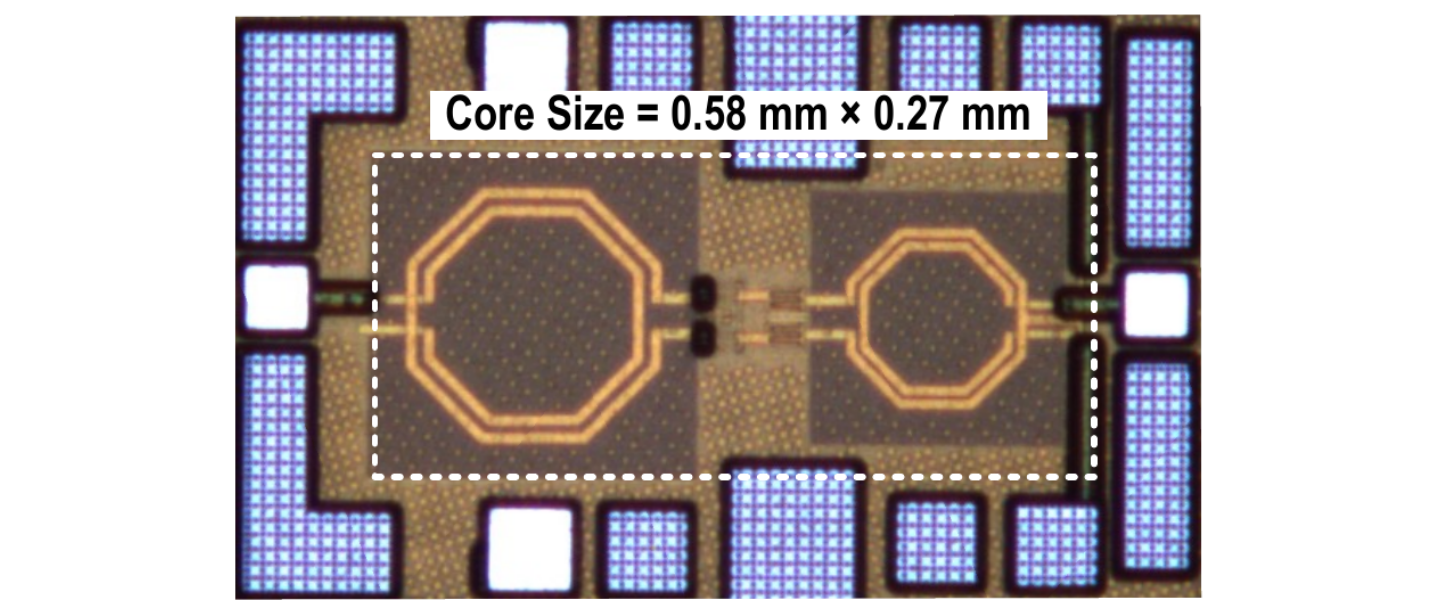
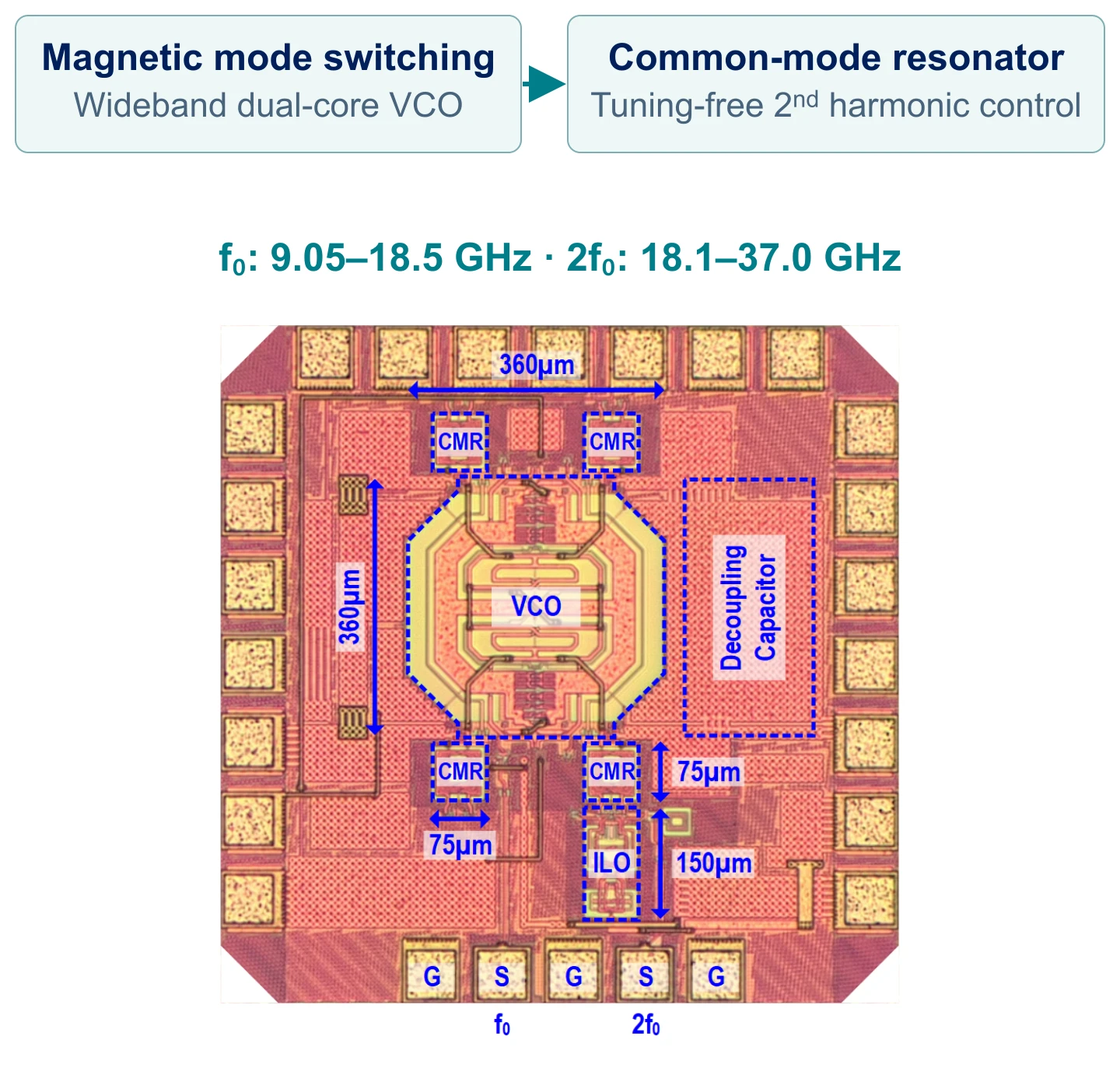
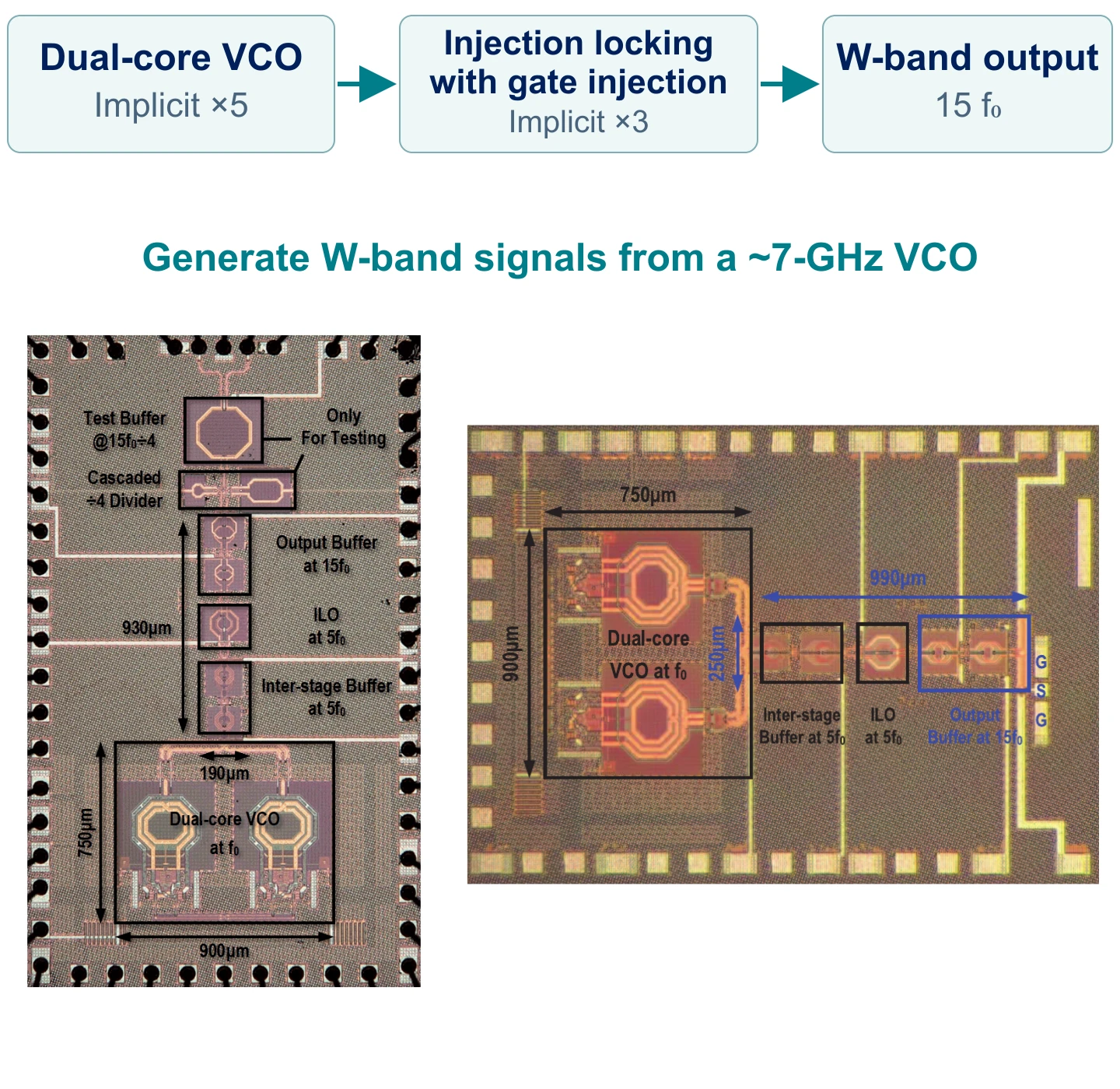
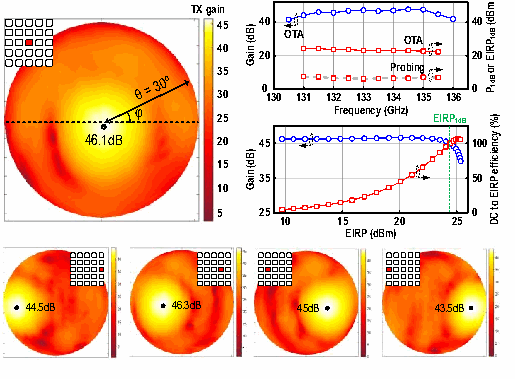
Wideband LO Generation
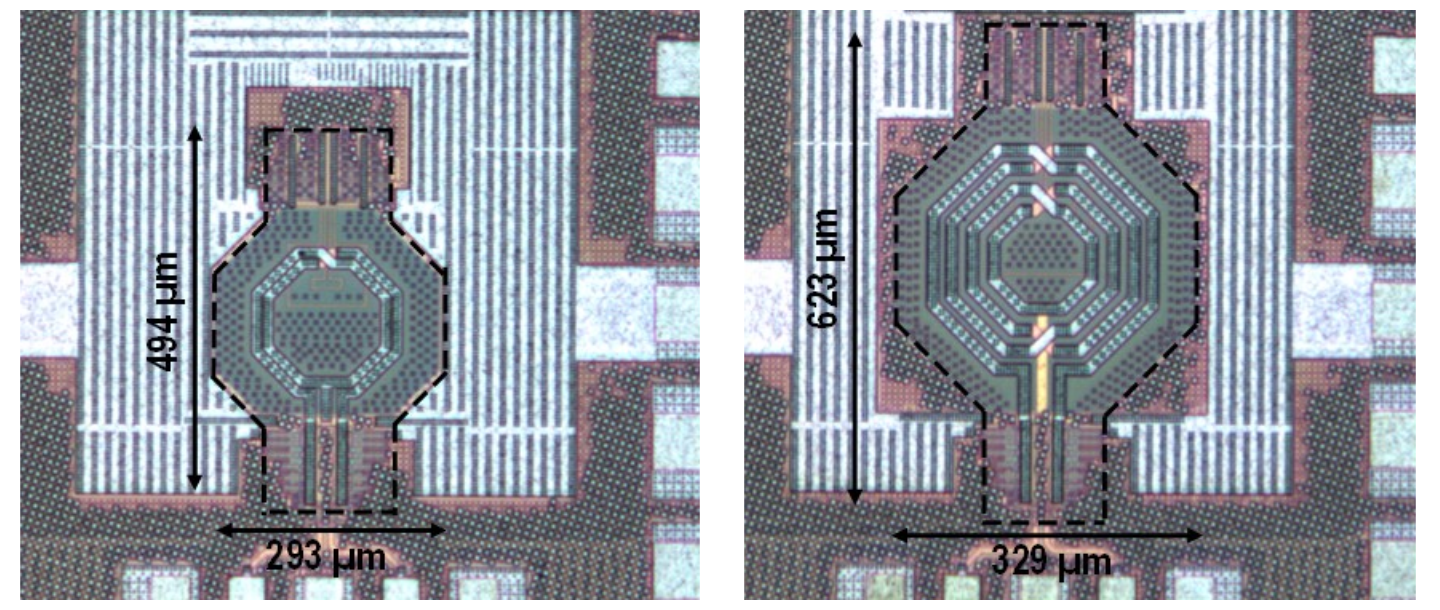
2025 ISSCC Lewis Winner Outstanding Paper Award
9.05–37.0 GHz · 190.7 dBc/Hz worst-case FoM
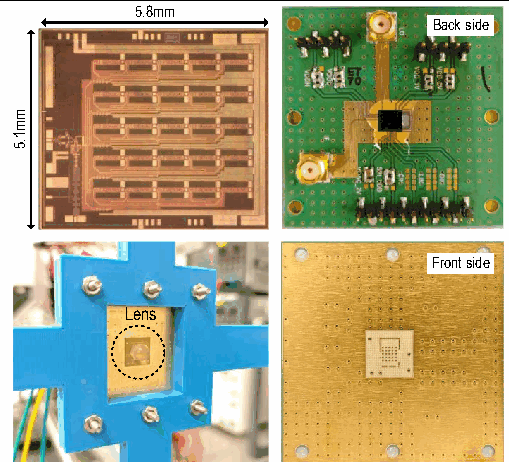
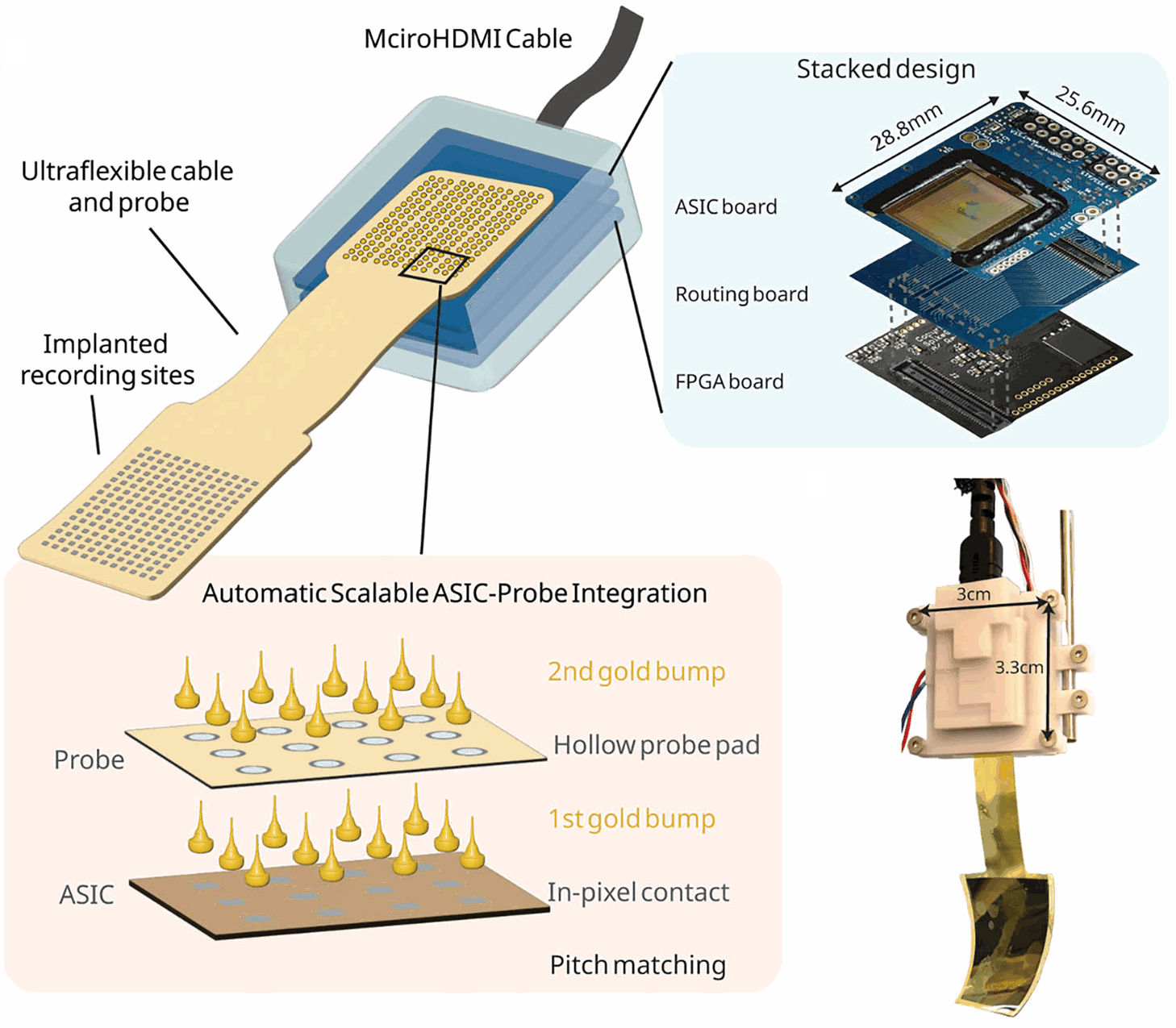
Recording system and flexible-probe integration
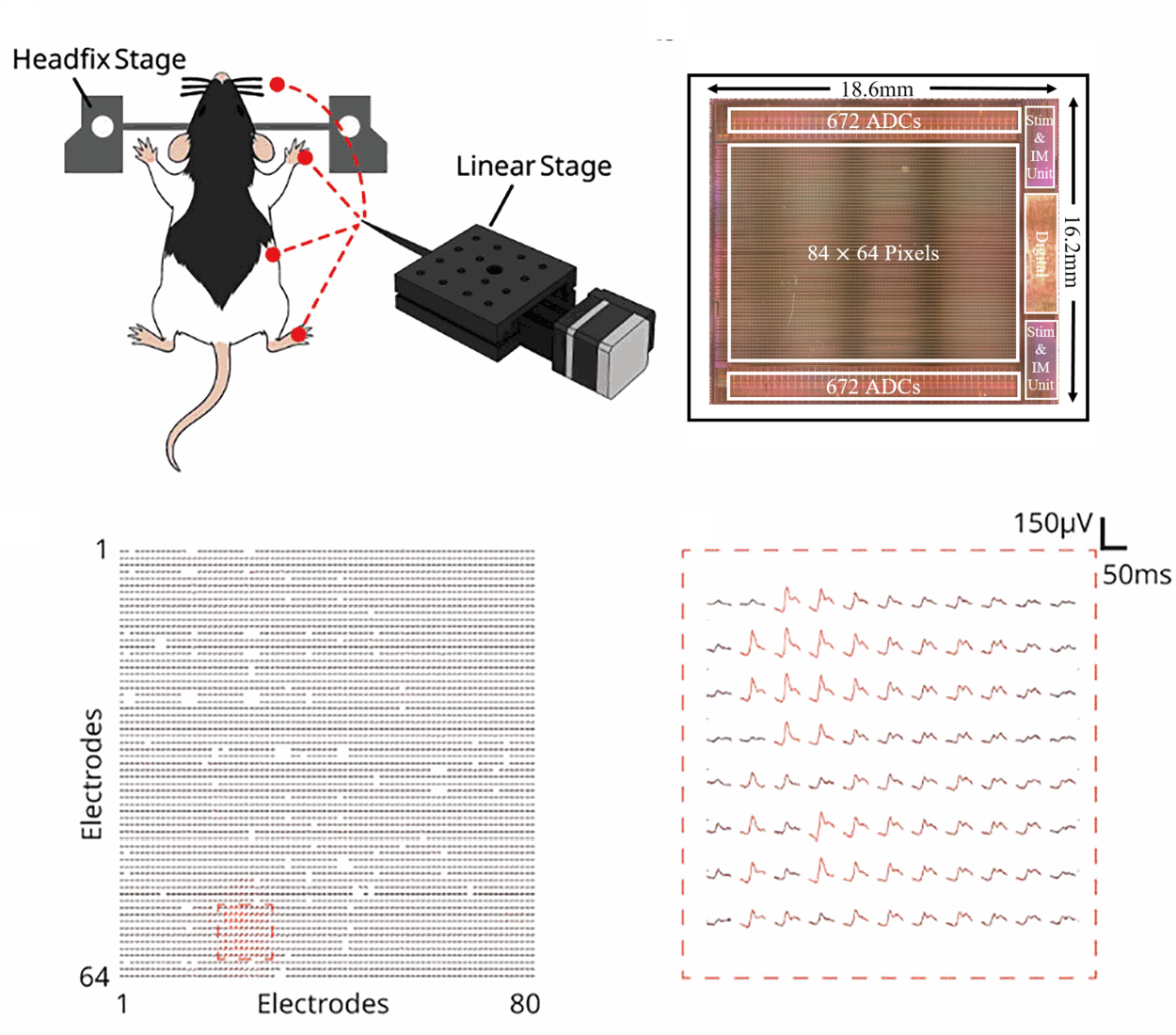
5,376 simultaneous channels · 20 kS/s per channel · Input-referred noise 5.3 μVrms
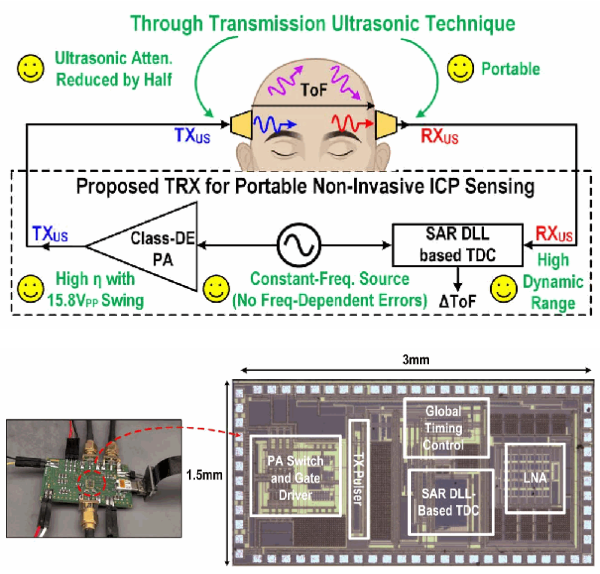
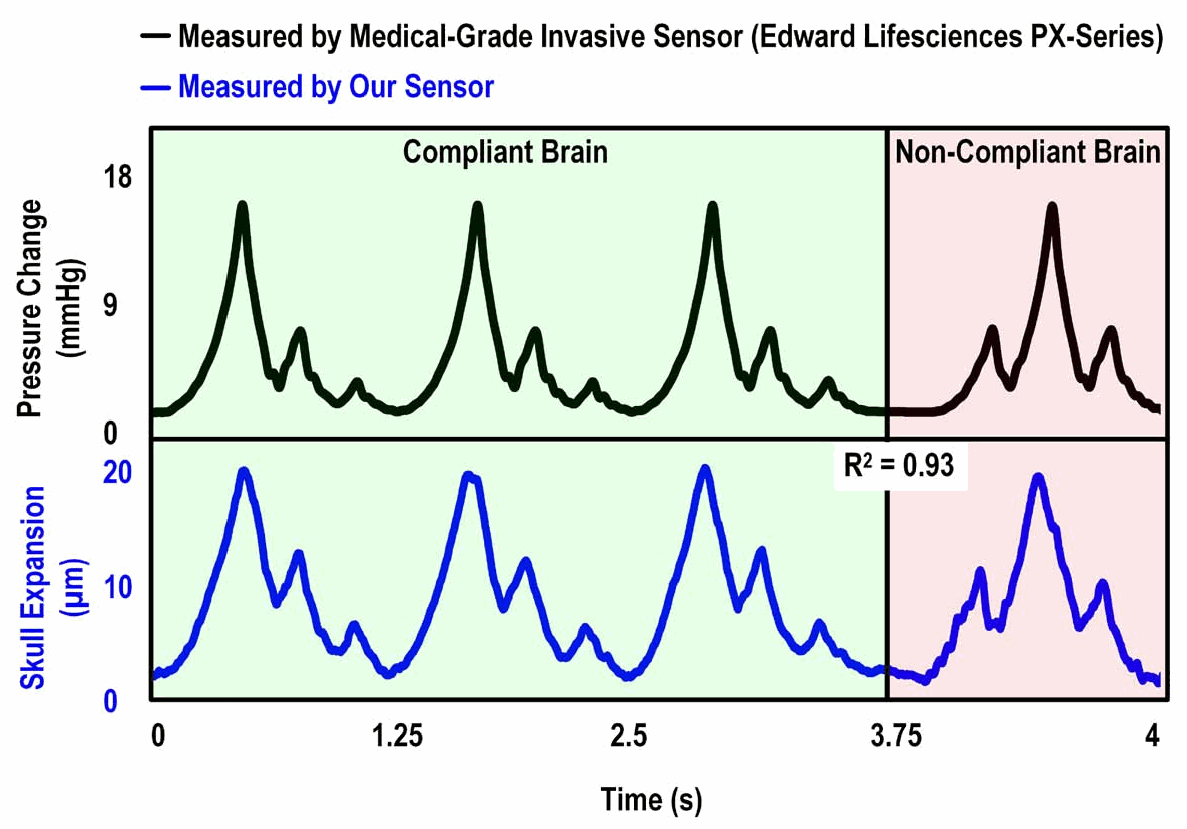
ICP waveforms benchmarked against a commercial, invasive ICP sensor.
9 mW DC power
Recent news
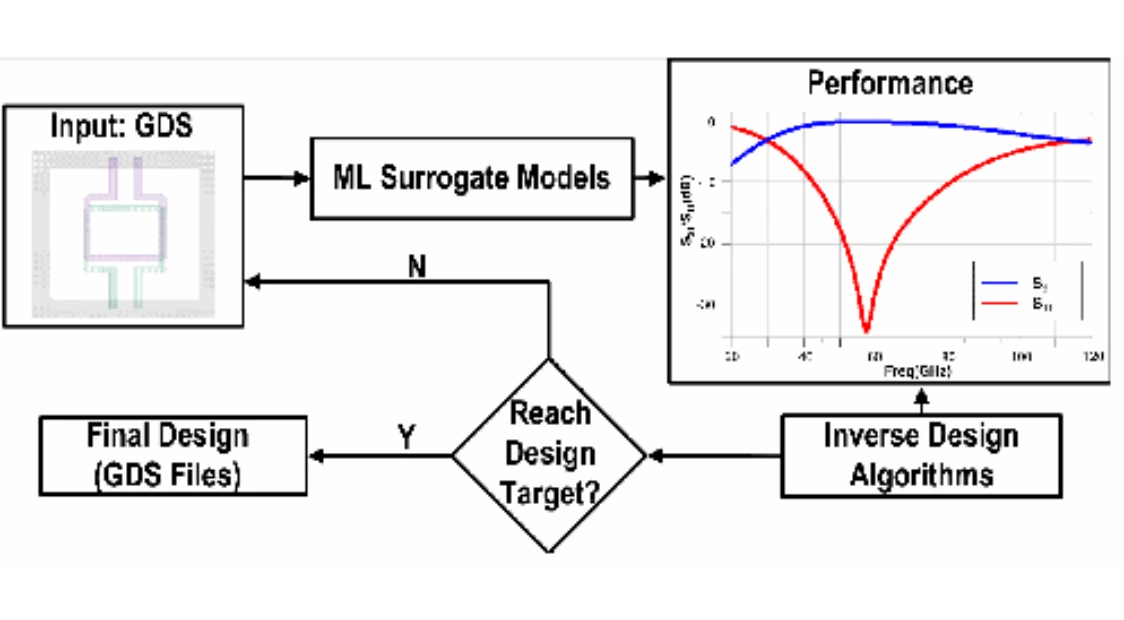
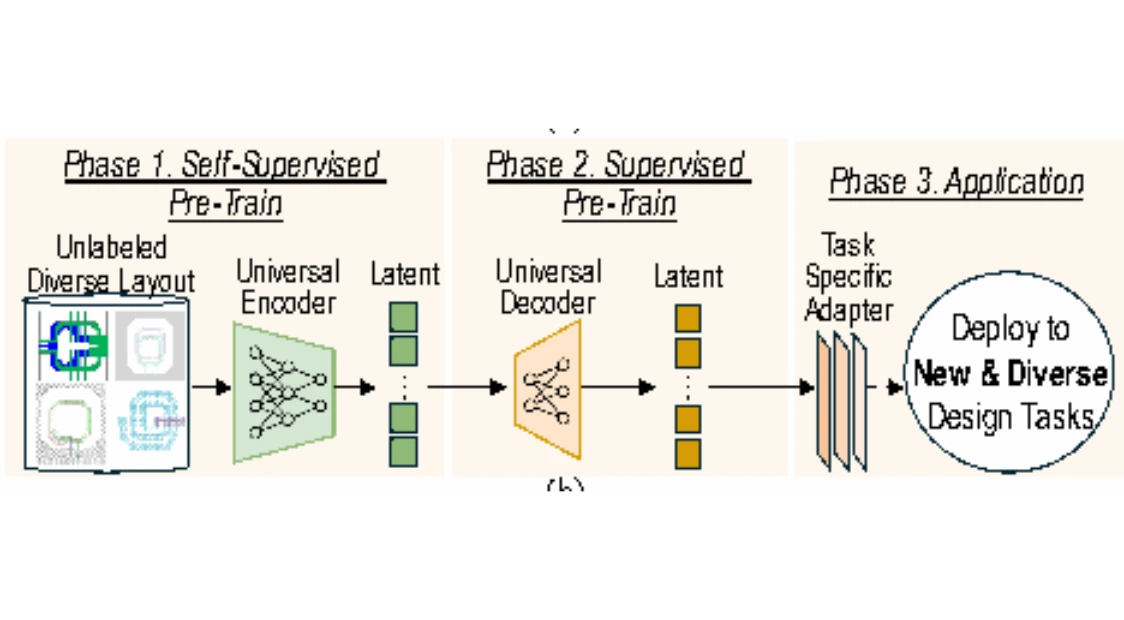
Houbo and Chris’s paper titled “FoundaRF: A Physics-Informed Foundation Model Framework for Radio-Frequency Passive Components” has been accepted to ICCAD 2026. This paper presents a foundation model framework that unifies passive layout modeling across diverse layout structures and technologies. Congratulations Houbo, Chris, and our collaborators at UT Austin!
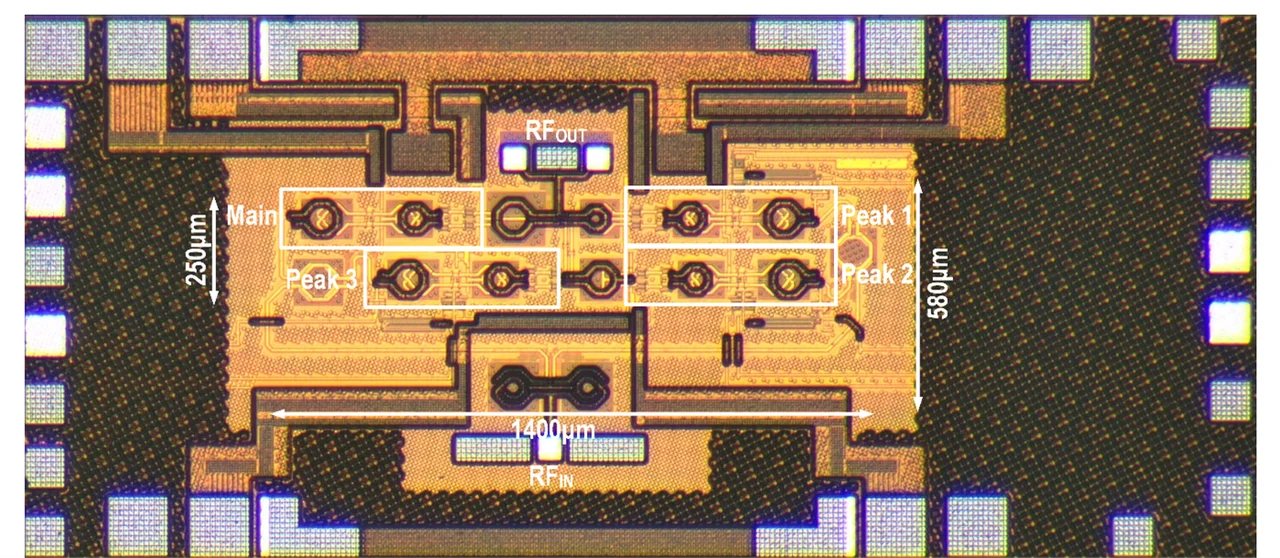
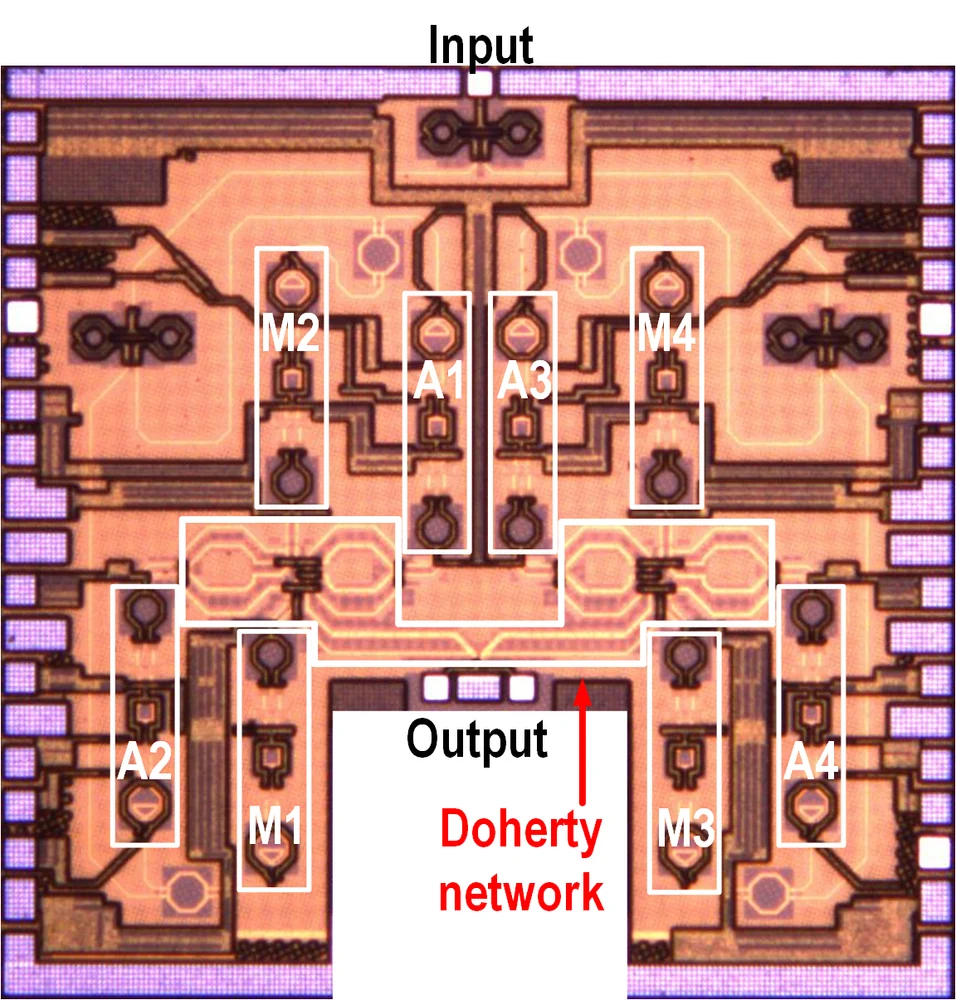
Our tutorial paper titled "Doherty Power Amplifiers: Fundamentals and Recent Advances" has been accepted to IEEE Solid-State Circuits Mag. (SSC-M). This paper is adapted from Dr. Chi's 2026 ISSCC tutorial, offering a comprehensive review of the Doherty PA, from its foundational principles to the latest silicon implementations.
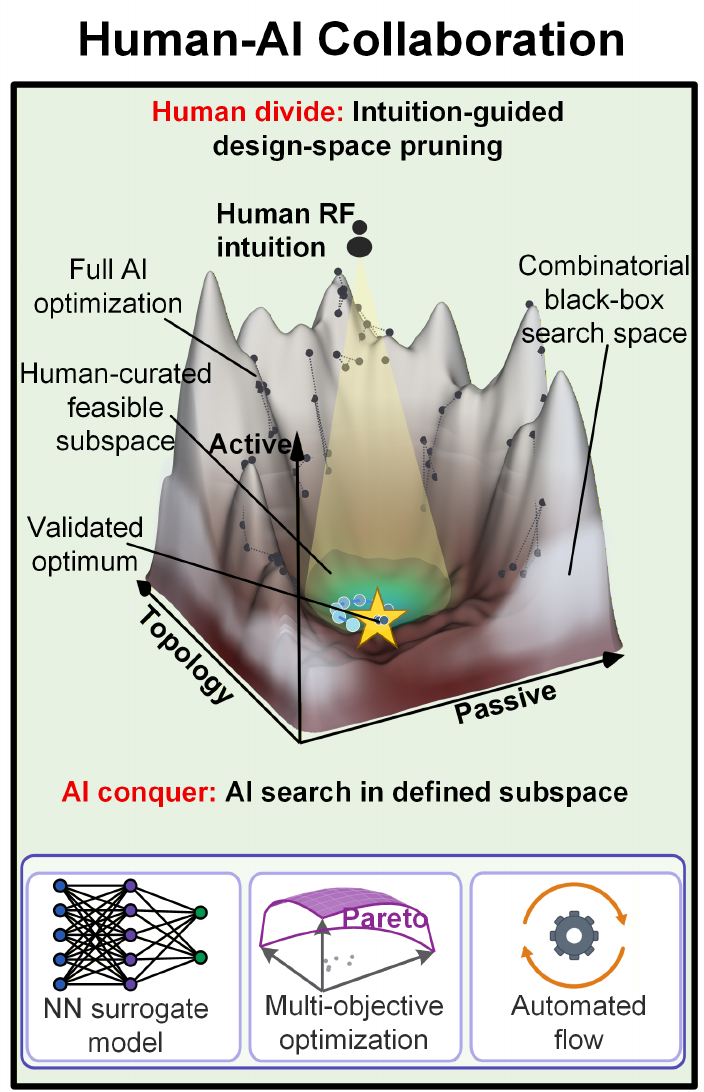
Yueqi and Houbo’s paper titled “RF-Agent: A Practical Framework for Building Language Agents for RFIC Design” has been accepted to ICLAD 2026. Congratulations!
Our preprint on a high-channel-count neural interface is now online. We developed an ASIC featuring 5,376 simultaneous recording channels, in-pixel amplification, full-bandwidth recording (20 kS/s per channel), multiplexed ADCs (12 bits), and on-chip stimulation. In collaboration with Prof. Chong Xie’s group, we demonstrated high-density flexible probe integration and in vivo recordings in rats. Congratulations to Yingying, who led this multi-year effort spanning chip design, chip-probe integration, system miniaturization, and animal experiments!
Update in August 2026: This manuscript has been accepted to npj Biomedical Innovations.
Update in August 2026: This manuscript has been accepted to npj Biomedical Innovations.
Hao and Yaolong’s ISSCC 2025 paper received the ISSCC Lewis Winner Outstanding Paper Award. Hao is also a co-first author of our ISSCC 2024 paper that won the same award. Congratulations on this back-to-back achievement!